Two days of php2shell, and an old naval pilot
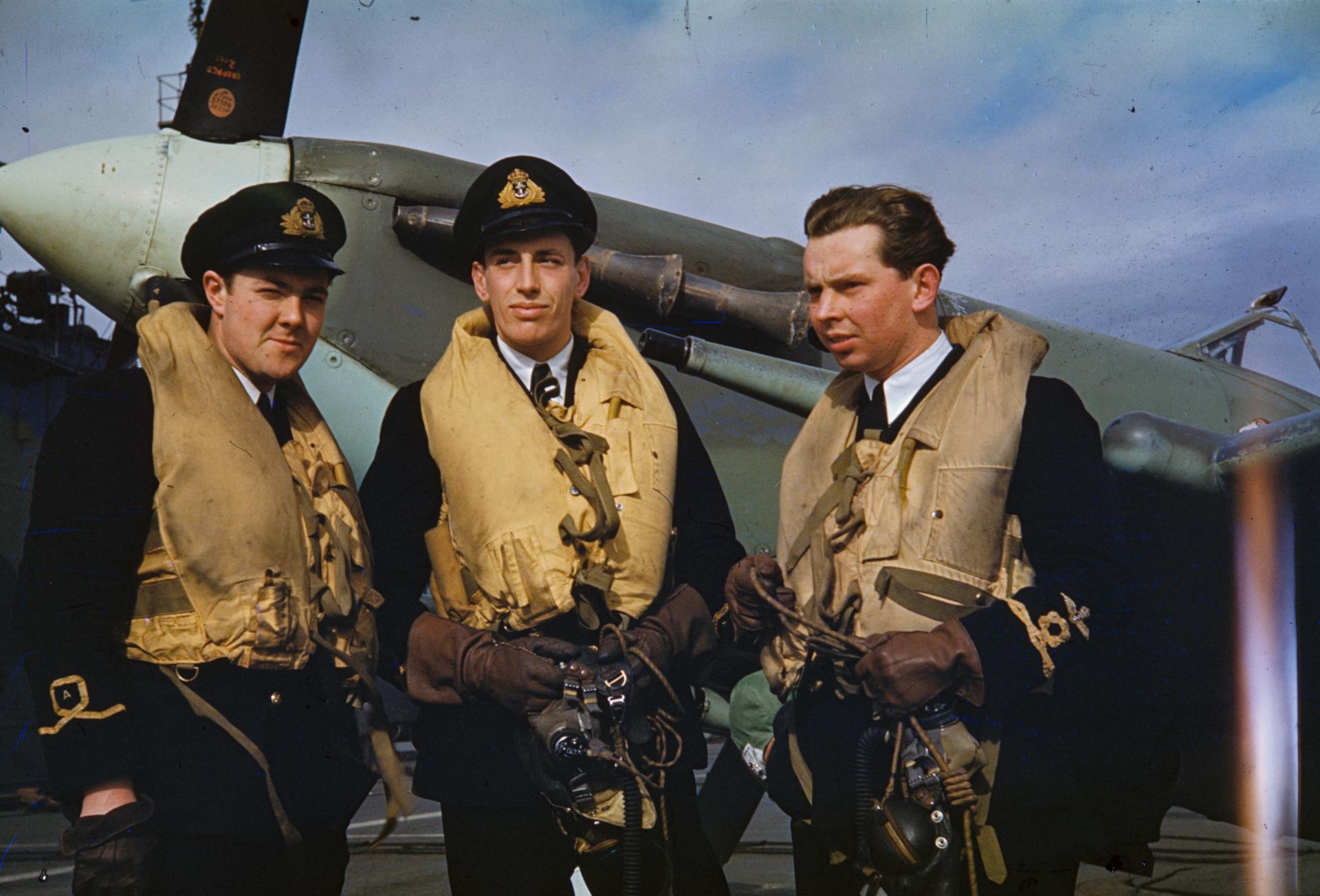
Photo: British official photographer, © IWM (TR 1121). Public domain (Crown copyright expired). The men pictured are not the people in this story.
Names and some details in this piece have been changed.
I. Two days in the air
For two days I barely left my desk.
1PHP is the programming language that quietly runs a large share of the world’s websites. When you open a page, PHP is the cook in the back kitchen, putting the dish together to order.2A serious PHP vulnerability made public in October 2026, nicknamed “php2shell”. In plain terms: a way for a stranger to slip instructions through the kitchen door.The news that someone had found a serious hole in PHP1 reached me late in the morning two days ago, if I remember rightly. It arrived out of nowhere.2 Send the right kind of crafted instruction from outside, and you could reach deep into the server. A great many websites run on PHP. Several of the ones I look after were among them, naturally.
3I write and make things from Niigata, a city on the Sea of Japan coast. Alongside the writing, I build and look after websites for local clients: a temple, a clinic, a teacher, a few small businesses. Nobody employs me to do security. It simply comes with the job.The work itself is unglamorous.3 Check the version, apply the update, then go through the site page by page to make sure nothing has broken. In between, read the logs and look for footprints you don’t recognise. By the time the sky outside began to pale, the last of the sites had gone quiet.
And then nothing happened.
Morning came, and nobody got in touch. The sites loaded as usual and were read as usual. I know, in my head, that this is what success looks like. Still, there is something unsettling about a job well done wearing exactly the same face as no job at all.
4In Japanese, on my site: “php2shell in three minutes”, “What happened with php2shell? PHP explained as a kitchen cook”, and “php2shell: your simple questions answered”.So, carrying that unease, I wrote about it.4 What had happened. What PHP actually is. I folded in the questions readers sent me, and in two days I had piled up more than sixty thousand characters of notes. I cut everything I wasn’t sure of and everything that repeated itself. What remained still ran past ten thousand characters, more than I’d have believed I could write in two days.
When I finally leaned back in my chair, an old man’s face came to mind. An Englishman I had met exactly once, a long time ago.
II. In the NAAFI
I can’t say exactly how many years ago it was. I was staying with an English friend somewhere in the south of England. I’ll call him Tom. One afternoon, Tom took me to see his grandfather.
Harry, as I’ll call him, was an old man with a very straight back. In the war, he had been a pilot, but not in the RAF. He had flown for the Navy, which I gathered was a small distinction he never let anyone forget. He flew fighters off carriers, somewhere out over the Mediterranean.
Around the second cup of tea, Harry took an old album down from the shelf. On the page he opened was a faded black-and-white photograph. A few young men in life jackets were standing on a flight deck, waiting for something. Harry pointed at one of them. “That’s me,” he said. The young man in the picture looked a little bored, and enormously proud. What struck me was that they all wore ties. You’d think a man climbing into a fighter could leave his tie behind.
“The Army lads used to have a go at us in the NAAFI all the time,” Harry said, and laughed.
Soldiers coming back filthy from the line would spot a man with wings on his tunic and start in on him. It was always the same line.
“Where the bloody hell were you lot? Never there when it mattered, were you?”
When he did the voice, Harry seemed, for some reason, rather to enjoy it.
You’ll know this better than I do. The British soldier has always had a grudge of this kind. On the beaches at Dunkirk, men waiting to be taken off looked up and cursed the empty sky. In fact many of the fighters were fighting inland, or above the cloud, holding off the bombers. From the beach you simply couldn’t see it.
III. Two orders
There was more to Harry’s story. The orders that came down from above, he said, were forever ridiculous.
One went something like this: go in low, right down on the water, and hit them. Fly low enough and the enemy can’t see you coming. Misjudge it slightly and you go straight into the sea. An easy order to give.
The other went: and bring that aircraft back without a scratch. We’ll need every one of them for the invasion.
Tom shrugged, snorted, and leaned over to me. “Mad, isn’t it?” he whispered. “Go in at wave height, but don’t you dare scratch the paintwork.”
I laughed too.
Go in low. Come back untouched. The people giving those orders must have known perfectly well what happens when you go in low.
At the time, I heard it as a funny story from another country and another age.
But after these two days, those two orders sound oddly familiar.
“Please fix it straight away. But don’t take the site down. Don’t break the layout. And, if possible, no extra cost.”
Nobody said those words to me in so many words. But in this line of work you hear them anyway.
And the aircraft themselves didn’t help. Harry’s fighter, as I understood it, had started life as a land-based design and been adapted for carriers. Its undercarriage was never really built for being slammed down onto a pitching deck. In some operations, I later read, more of these aircraft were wrecked landing on their own carriers than were ever lost to the enemy. Ordered to keep them in one piece, the pilots were flying machines that were hard to keep in one piece at all.
Repairing a site built years ago on old foundations, without breaking anything, is not so different. Remembering Harry’s aircraft, I felt a little sympathy. For the machine, and for the man flying it.
IV. Gun camera
That said, it would be wrong to cast myself alongside Harry and toast our shared lack of thanks. He was risking his life. I was risking, at most, a night’s sleep.
And there is one more difference between us.
Fighters in those days carried a small cine camera, the gun camera. When the guns fired, the film ran, recording what happened up there. A pilot’s claims were only confirmed back on the ground, once the film had been developed. It was a device for showing people on the ground what nobody on the ground could see.
That, I think, is what I was doing for those two days.
5The comparison goes like this. A static website is a shop selling pre-packed lunches; a dynamic one is a restaurant, and PHP is the cook. php2shell was a way to hand the cook forged orders.In my earlier pieces, I compared PHP to a cook in a restaurant kitchen,5 to explain what goes on in the back of a website. I wrote about where the hole was, and why it had to be closed. I tried to make visible what had been happening where no one could see it.
Harry, cornered in the NAAFI by some rough infantryman, had no way of answering back. What happened in the air was understood only by those who had been there. I, at least, can write. I complain about going unthanked, and yet I hold a tool that does something about it. In that respect, I have it a little easier than Harry did.
V. What the swearing meant
One thing kept nagging at me. Why did Harry enjoy doing that voice so much?
After a while, I think I understood. The soldiers’ abuse was, turned inside out, a kind of expectation. You shout “where the bloody hell were you” because you wanted them there. Because you were counting on them to cover you from above. Nobody bothers to have a go at someone they never relied on in the first place.
If that’s right, then the abuse Harry took in the NAAFI was a medal of sorts.
No one ever gave him a citation for it. But everyone on the ground fought on the assumption that someone was up there.
Two days on, the sites I look after are loading quietly today. Nobody says a word. Somewhere, I think, that connects with whatever Harry felt in the din of the NAAFI.
6The photograph at the top is from the Imperial War Museums’ wartime colour collection (IWM TR 1121). The men in it are not the people in this story.While writing this, I went looking through the Imperial War Museums’ photographs. I came across a colour picture.6 On a carrier deck, three pilots wait for the day’s orders. A fighter stands behind them. None of them is Harry. But they looked exactly like him in the album.
What stopped me was the colour. The life jackets that had looked plain grey in Harry’s photograph were a brilliant yellow.
Perhaps the fight in the air was not the only thing the people on the ground never saw.
All that time, in grey memories, they had been wearing yellow.
NOTES
- PHP is the programming language that quietly runs a large share of the world’s websites. When you open a page, PHP is the cook in the back kitchen, putting the dish together to order.
- A serious PHP vulnerability made public in October 2026, nicknamed “php2shell”. In plain terms: a way for a stranger to slip instructions through the kitchen door.
- I write and make things from Niigata, a city on the Sea of Japan coast. Alongside the writing, I build and look after websites for local clients: a temple, a clinic, a teacher, a few small businesses. Nobody employs me to do security. It simply comes with the job.
- In Japanese, on my site: “php2shell in three minutes”, “What happened with php2shell? PHP explained as a kitchen cook”, and “php2shell: your simple questions answered”.
- The comparison goes like this. A static website is a shop selling pre-packed lunches; a dynamic one is a restaurant, and PHP is the cook. php2shell was a way to hand the cook forged orders.
- The photograph at the top is from the Imperial War Museums’ wartime colour collection (IWM TR 1121). The men in it are not the people in this story.